Electrical housings and connector bodies succeed in pressure die casting only when the alloy, machine, die layout and inspection plan are specified together. You will be able to screen suitable parts, compare tooling proposals and confirm whether a Delhi-based mould maker can deliver a production-ready die rather than only a cavity block.
Key takeaways
- Use aluminium for heat dissipation, zinc for fine detail, and magnesium for lower weight.
- Match projected area, shot weight, clamping force and die dimensions before cutting steel.
- Control porosity with overflow design, vacuum assistance, venting and measured filling conditions.
- Compare suppliers using trial reports, dimensional data, steel grades and tool-maintenance support.
Which electrical parts are suitable for pressure die casting?
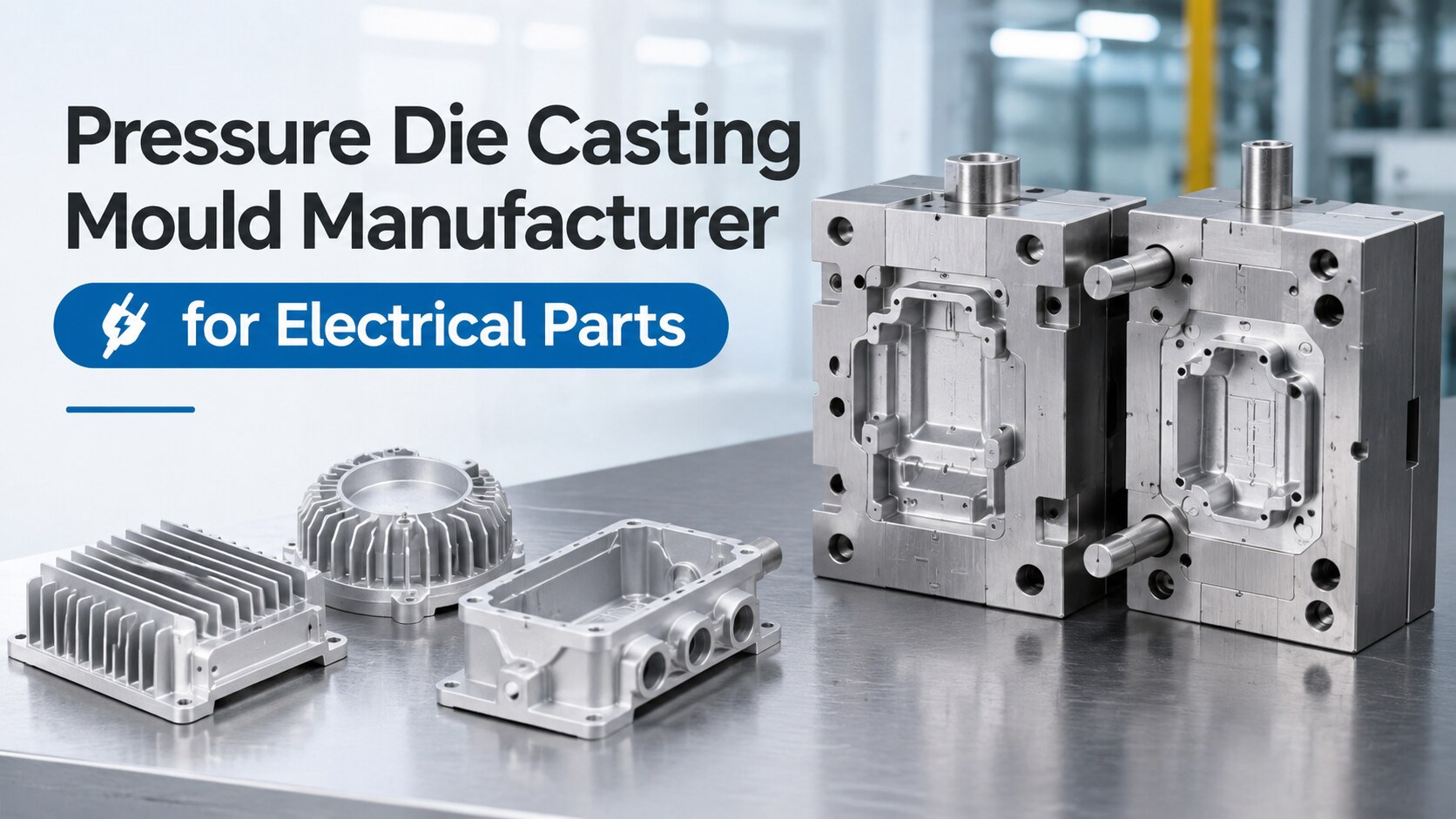
Thin-walled metal parts with repeated production demand are the strongest candidates for pressure die casting. Terminal housings, connector bodies, switchgear covers, heat sinks and motor components can benefit from accurate ribs, bosses, mounting faces and integrated shielding.
A custom pressure die casting mould becomes harder to justify when the part needs extensive machining, has very thick sections that trap porosity, or will be produced only in a small batch.
| Part type | Why it fits | Warning before quotation |
|---|---|---|
| Terminal housing | Repeated cavities, mounting features and electromagnetic shielding | Confirm insulation clearances and insert retention |
| Connector body | Thin walls and consistent dimensions suit high-volume production | Protect sealing faces from flash and porosity |
| Switchgear cover | Ribs, bosses and heat-spreading surfaces can be cast together | Check dielectric spacing and flatness after trimming |
| Heat sink | Fins and a broad thermal path reduce assembly count | Compare fin thickness with alloy flow and die life |
| Low-volume prototype | Tooling cost and development shots dominate | Consider machining or additive production first |
Before requesting a quotation, verify these decision points:
- Geometry: the part has uniform sections, practical draft, accessible ejection and no unmanageable undercuts.
- Performance: the alloy can meet conductivity, strength, corrosion, heat-dissipation and dimensional requirements; do not specify die casting for a pressure-tight or porosity-critical part without a defined validation method.
- Volume: forecast demand supports tooling, trial shots, trimming and maintenance costs across the programme.
- Evidence: request fill simulation, overflow and vent locations, inspection criteria, sample quantity and the proposed production cycle. A single acceptable sample does not prove repeatability.
How should you choose the alloy for an electrical housing?
Start with the electrical duty, not the alloy catalogue. A housing for a low-voltage connector needs adequate insulation distance and corrosion resistance; a heat sink or motor end cover must move heat into the air; a shielded enclosure may need electrical continuity at its joints.
Die-cast alloy is not a substitute for a copper conductor or machined contact surface.
| Alloy | Main advantage | Main compromise | Suitable electrical use |
|---|---|---|---|
| Aluminium | Low weight, good heat dissipation, useful corrosion resistance | Lower strength and conductivity than copper; oxide can raise contact resistance | Heat sinks, motor housings, switchgear covers and larger enclosures |
| Zinc | High strength, excellent detail, stable dimensions and good impact resistance | Much heavier than aluminium and less effective for heat removal | Compact connector bodies, terminal housings, latches and thin detailed covers |
| Copper alloy | Highest conductivity and strong heat transfer | High density, higher material cost and more demanding die filling | Conductive housings, terminals or current-carrying components where aluminium cannot meet the duty |
| Magnesium | Very low weight and good stiffness-to-weight ratio | Corrosion protection and process controls need close attention | Lightweight housings where structural mass matters more than conductivity |
Use aluminium when weight and heat dissipation dominate. Choose zinc when small size, threads, bosses and impact strength matter more than mass. Specify copper alloy only when the housing itself carries current or must spread substantial heat.
Ask a pressure die casting mould maker to confirm the selected grade, temper, coating, contact-finish plan and thermal test method. Check galvanic corrosion where the casting meets copper, steel or aluminium fasteners.
What machine and die details must match before steel is cut?
Before steel is cut, confirm that the die matches the actual machine envelope, injection system and electrical part—not merely the CAD cavity.
1. Send the machine’s shot-sleeve diameter and length, maximum shot weight, clamping force, tie-bar spacing, platen dimensions, minimum and maximum die height, ejector stroke and injection-pressure range. Check the die also has the required molten-metal temperature range and vacuum connections. A die that fits the component but not the machine cannot run without expensive rework.
2. Approve the parting line and draft analysis before detailing slides, lifters and inserts. Keep the line away from connector interfaces and sealing lands, add draft for balanced release, and verify alloy-specific shrinkage around bosses, ribs, thick sections and slides rather than applying one factor everywhere.
3. Match wall sections, ribs and bosses to the filling plan. Gate and runner locations control the flow front and weld-line position; vents and overflows must evacuate air and provide defined trim areas. Request a fill simulation and a drawing showing every vent, overflow and trimming operation.
4. Review cooling circuits, vacuum channels and ejector pins together. Pins must land on strong, non-cosmetic areas, not thin walls or sealing surfaces, or ejection can create distortion, cracks and pin marks. Confirm the cooling layout controls hot spots without blocking maintenance access.
Ask any pressure die casting mold in Delhi supplier for the proposed die layout, cooling and vacuum schematics, machining allowances, steel grade, hardness records and maintenance plan before approving manufacture.
How do die design and validation control porosity, heat and tool life?
Gas porosity and cold shuts begin with uncontrolled metal flow, trapped air or an overheated die. Require fill-flow simulation showing gate, runner, overflow and vent locations, then check that vents evacuate air without creating excessive flash.
Vacuum assistance helps only when the die seals, vacuum valves and channels work, the shot profile is controlled, and the achieved vacuum level is recorded; it does not correct shrinkage porosity.
Ask the pdc mould manufacturer in Delhi for these records before approval:
- Flow simulation identifying fill time, weld lines, air traps, overflow filling and vent-trim locations
- Cooling and vacuum schematics, including circuit inlets, outlets, pressure-test results and vacuum readings during filling
- Die-steel certificate naming the grade, cleanliness condition and hardness, rather than only a trade name such as H13
- Heat-treatment chart showing austenitising, quenching and tempering results, plus any nitriding or other surface protection
- Trial reports recording dimensions, flash, porosity inspection, sticking, soldering, burns and heat-checking after repeated cycles
Thermal management controls both part quality and tool life. Channels too close to the cavity cause distortion or cracking; channels too far away leave hot spots that promote sticking, soldering and heat-checking.
Validate preheating, metal temperature, cycle time and cooling balance through die trials, and retain CAD, machining, EDM, assembly, repair and correction records so dimensional drift has a traceable owner.
How should you compare a pressure die casting mould manufacturer in Delhi?
The cheapest die is not the lowest-cost option if its cycle time, repair access or cavity count misses your output target. Compare prototype, production and multi-cavity tooling against annual volume, required cycle time, changeover frequency and the cost of a second tool.
| Option | Volume and cycle-time need | What to verify |
|---|---|---|
| Prototype tooling | Samples, fit checks and low-volume trials; slower cycles are acceptable | Simple cavity layout, replaceable inserts, tryout shots and a clear upgrade path |
| Production tooling | Repeated orders and a defined takt time | Cooling balance, automated ejection, trimming method, stable shot parameters and spare inserts |
| Multi-cavity tooling | High volume where one cycle must produce several identical parts | Cavity-to-cavity filling, balanced gates, independent cooling, matching dimensions and simultaneous inspection |
Ask a pressure die casting mould manufacturer in Delhi to quote the complete tool chain, not only the cavity block. The quotation must identify CAD and flow analysis, CNC, EDM and wire EDM, heat treatment, polishing, assembly, die spotting, tryout shots, trimming dies, gauges, spare cores, ejector pins and correction work.
Request these documents before placing the order:
- Steel grade, hardness and heat-treatment records, plus proposed parting line, slides, lifters, draft analysis and machining allowances.
- Cooling and vacuum schematics, inlet and outlet locations, pressure-test method, flash-removal plan and spare-insert strategy.
- Inspection reports separating as-cast dimensions from machined dimensions, with critical connector datums and sealing faces identified.
- An acceptance plan covering alloy grade, melt and die temperatures, pressure, shot profile, lubrication, cycle time and consecutive stable shots.
GM Industries should be asked for the same evidence and maintenance package as every competing supplier. Include cleaning intervals, cooling-circuit checks, lubrication points, wear limits, repair responsibility and replacement-part lead times.
Related products
 | Pressure Die Casting Mould ₹15000 In accordance with industry principles, we are engaged in offering Pressure Die Casting Moulds. View product → |
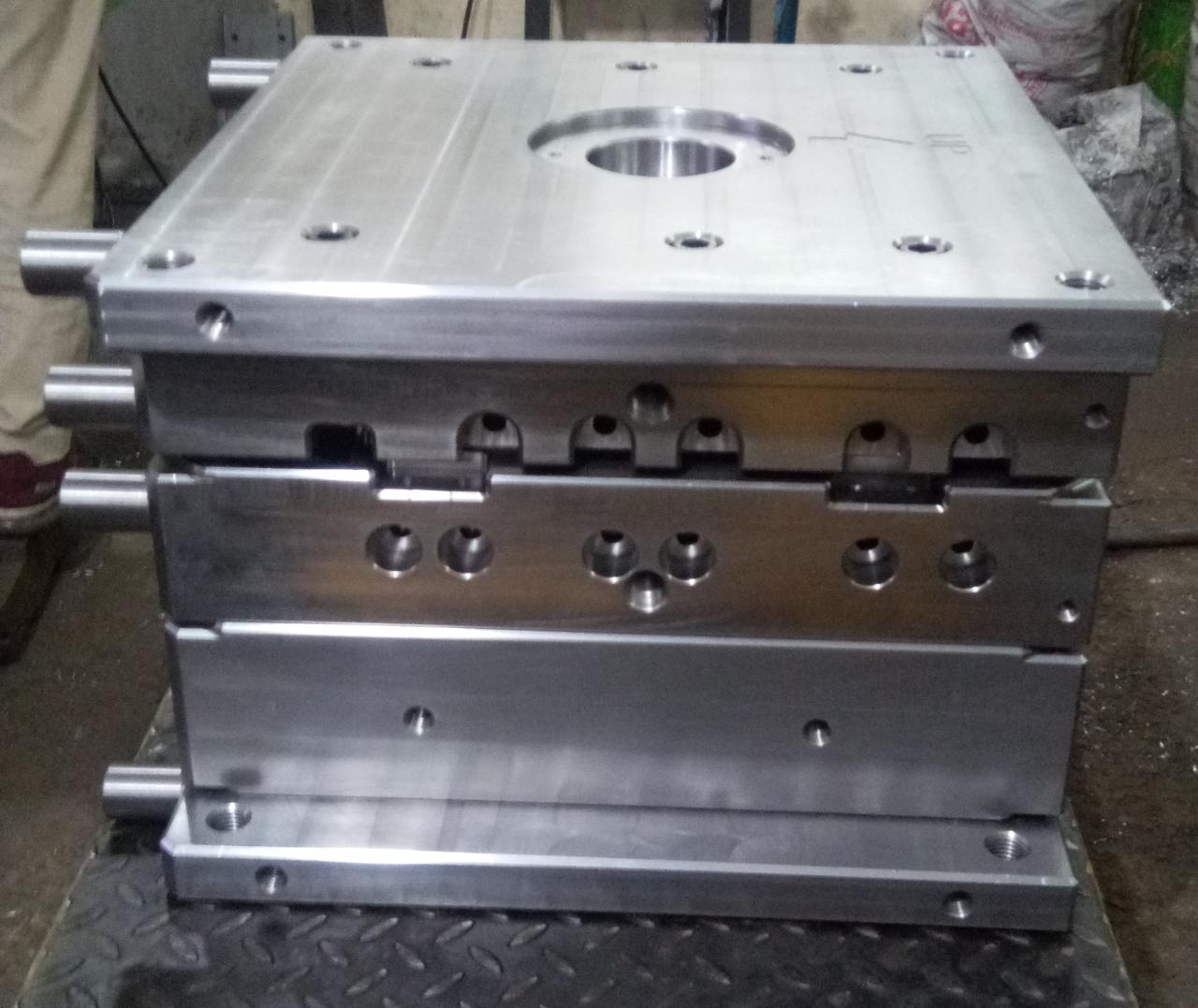 | Plastic Mold GM INDUSTRIES is the leading supplier of PLASTIC MOLD MAKER/ALMUNIUM CASTING MOLD/PDC MOULD/ALMUNIUM DIE CASTING MOLDS/PLASTIC COMPONENT MOLD/DIE... View product → |
Frequently asked questions
Which electrical parts are suitable for pressure die casting?
Terminal housings, connector bodies, switchgear covers, heat sinks and motor components suit the process when they need thin walls, repeatable dimensions, ribs, bosses or integrated shielding.
How should you choose the alloy for an electrical housing?
Choose aluminium for heat dissipation and corrosion resistance, zinc for fine detail and smaller parts, or magnesium when low weight matters. Check conductivity, strength, operating temperature and finishing requirements before approval.
What machine and die details must match before steel is cut?
Confirm projected area, shot weight, clamping force, injection pressure, die envelope, tie-bar spacing, ejector layout, cooling connections and the machine's available shot sleeve size.
How do die design and validation control porosity, heat and tool life?
Use balanced runners, correctly placed gates, vents, overflows, cooling channels and ejection features. Validate them with fill-flow trials, X-ray or CT inspection, dimensional checks and leak testing where required.
How should you compare a pressure die casting mould manufacturer in Delhi?
Compare design reviews, DFM feedback, steel grade, machining capability, trial documentation, dimensional reports, porosity controls, repair support and experience with your machine and alloy.
Related products
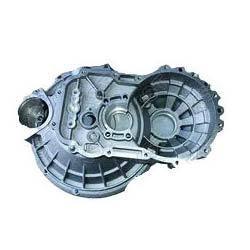 | Aluminum Casting Die ₹20000 As a noticeable firm, we are affianced in offering an exclusive range of Aluminum Casting Die. View product → |
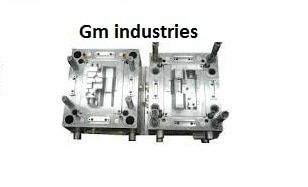 | Die Mold ₹20000 GM INDUSTRIES is the leading supplier of PLASTIC MOLD MAKER/ALMUNIUM CASTING MOLD/PDC MOULD/ALMUNIUM DIE CASTING MOLDS/PLASTIC COMPONENT MOLD/DIE... View product → |
Keywords