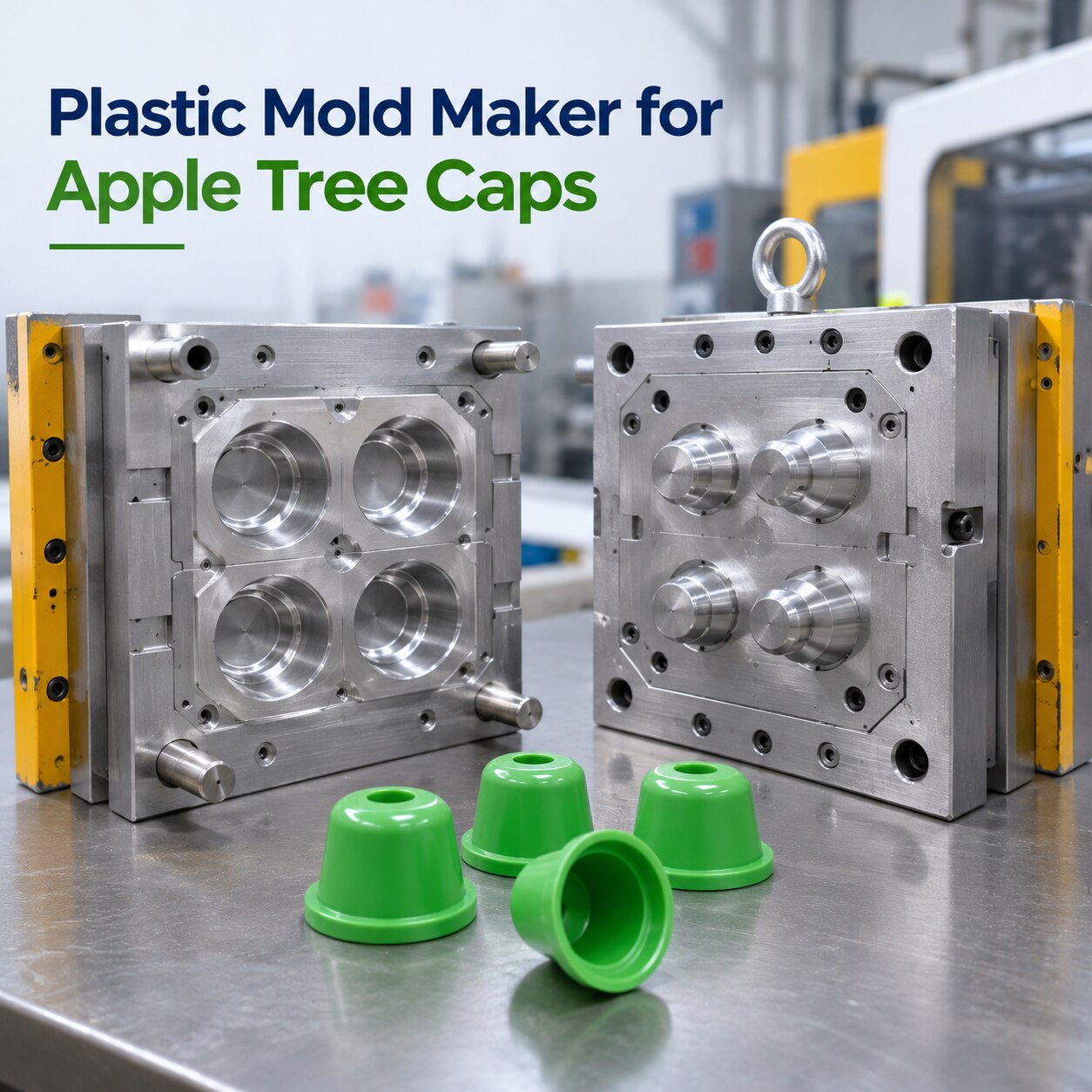
An apple-tree cap is not a sufficient mould specification: it could protect a graft union, cover a cut branch, guard a young stem, or connect to an irrigation tube. Define the cap’s function, dimensions, material, fit and outdoor exposure first, then compare standard parts, trial methods and custom tooling before requesting a quotation.
Key takeaways
- Define whether the cap protects grafts, excludes pests or connects to tubing.
- Match resin, UV protection, wall thickness and retention force to field conditions.
- Separate prototype tooling, production tooling and per-piece pricing in the RFQ.
- Approve samples using fit, removal force, sealing and weather tests—not appearance alone.
Define the cap’s job before specifying an apple tree plastic mould
An apple tree cap can protect a graft union, cover a cut branch, support a young stem, exclude pests, limit moisture loss, or connect to an irrigation or support tube. State the job before requesting an apple tree cap plastic mold; each purpose changes the fit, opening, ventilation and sealing requirements.
Do not treat a nursery cap, grafting cap, stem protector and irrigation component as interchangeable. A grafting cap needs controlled contact around the union, while a stem protector needs growth clearance and ventilation. An irrigation cap must match a tube, thread or barb and resist leakage.
- Measure the tree stem or mating-part outside diameter, existing cap inside diameter, cap height, wall thickness, opening size, taper and overlap length.
- Record the snap-fit location, split seam, latch, thread, barb and growth clearance. Ask how much the stem will expand during service and whether you will remove the cap or leave it outdoors.
- Mark drainage slots, ventilation holes, ribs and sealing lips. Photograph the cap beside a ruler and send a cut section; those details reveal geometry that one diameter misses.
Use the measurements to define the apple tree cap dimensions before ordering a custom plastic cap mould. Include the stem diameter range, outdoor duration and required cap-on force in the drawing, not only a sample photograph.
Choose resin, light protection and fit features together
Material choice and geometry must follow the cap’s outdoor job. For apple tree cap resin selection, use UV-stabilised polypropylene for low weight, chemical resistance and repeated flexing; high-density polyethylene for greater impact resistance and flexibility; and ABS for stiffness and appearance when sunlight exposure is controlled.
Choose another engineering grade only when temperature, chemical or strength demands justify its cost.
| Resin | Strengths | Use when |
|---|---|---|
| UV stabilised polypropylene cap | Light, chemically resistant, flexes repeatedly | The cap needs low weight, outdoor durability and a possible living hinge |
| High-density polyethylene | Tough, flexible, impact resistant | The cap may be knocked, squeezed or fitted over variable stems |
| ABS | Stiff, dimensionally stable, attractive surface | Direct sunlight is controlled or exposure is brief |
| Engineering grade | Higher temperature, chemical or strength performance | The service requirement exceeds PP, PE or ABS |
State the grade and UV-weathering requirement, not merely “black plastic.” Decide whether the cap is opaque, translucent or ventilated: opacity reduces direct sunlight at a graft or stem, while vents and drainage slots release trapped heat and moisture.
A custom plastic cap mould should include:
- Start with 1–2 degrees of draft per side on many textured PP or PE surfaces; add more for deep draw or heavy texture.
- Keep walls uniform and make ribs about 40–60% of adjoining wall thickness to limit sink.
- Put adequate vents at end-of-fill areas.
- Place the gate away from a sealing lip, snap arm or living hinge.
- Form a PP living hinge as a thin, uniform section with suitable molecular orientation. For occasional assembly, use a flexible snap arm instead of risking hinge cracking.
Compare custom injection moulding with faster or cheaper trial routes
A new mould earns its cost when the cap needs repeatable dimensions across medium-to-high volumes. For one orchard trial, buy a standard cap if its stem size and retention are already proven; do not commission an apple tree cap plastic mold to answer a fit question.
| Option | Strength | Main trade-off |
|---|---|---|
| Injection moulding | Consistent dimensions for repeat production | Higher tooling cost and lead time |
| Thermoformed sleeve | Fast, low-cost tooling for open-ended shapes | Less precise fit and weaker detail |
| Blow moulding | Efficient for hollow bodies | Unsuitable for many solid, tight-tolerance caps |
| 3D printing | Quick fit-check geometry | A production mould versus 3D printed cap gives better durability, finish and repeatability |
| Standard purchased cap | Immediate option for one trial or established stem size | Limited sizes, features and growth clearance |
For injection, compare a one-cavity tool with a balanced multi-cavity tool and a family mould. One cavity costs less but produces fewer parts; balanced cavities cost more and improve consistency. Different cap sizes in a family mould can fill and pack unevenly.
Ask whether aluminium or soft-steel tooling is enough for validation, or whether production steel suits the annual quantity and required tool life. Add interchangeable inserts when future stem diameters are uncertain.
Freeze the production resin and grade before cutting final steel for a custom plastic cap mould. Shrinkage changes between PP grades or between PP and HDPE can alter snap retention, thread fit, sealing and ovality.
Prepare a Mayapuri mould-maker RFQ that separates design from production
A local supplier quote is comparable only when it separates design responsibility from tool production and moulding. Search phrases identify businesses, not scope: a plastic cap mould maker in delhi may design a tool, while an injection moulder may only run one.
Ask every bidder to complete these lines:
- Product design and CAD: party responsible
- Filling or mould-flow review: included, outsourced, or excluded
- Mould manufacture, first trials, correction loops, and production moulding: separate prices
- Ownership, spare inserts, cavity numbers and maintenance instructions
Require a tool-layout drawing showing cavity count, parting line, gate, vents, ejectors, draft, cooling channels, shut-offs and predicted weld-line locations. A gate on a sealing lip or snap arm can create a vestige or weak line exactly where the cap carries stress.
Put these inputs on the RFQ:
- Resin grade, colour, UV stabilisation, annual quantity and target tool life
- Critical diameters, snap-fit force, expected outdoor period and future size changes
- Trial-tool material—aluminium, soft steel or production steel—plus interchangeable inserts and target shot count
The search phrase plastic mould manufacturer mayapuri does not prove that one supplier performs every stage. Compare quotations using this split:
| Scope | Quote A | Quote B |
|---|---|---|
| Design and analysis | Separate price | Included or absent |
| Tool and corrections | Tool price plus loop count | One lump sum |
| Moulded parts | Per-piece price and volume | Not stated |
GM Industries is relevant if it coordinates the custom tool and trial parts, but compare deliverables rather than Mayapuri location alone. The phrase plastic mold maker for apple tree caps mayapuri in delhi is a search term, not proof that one supplier handles every stage.
Related product
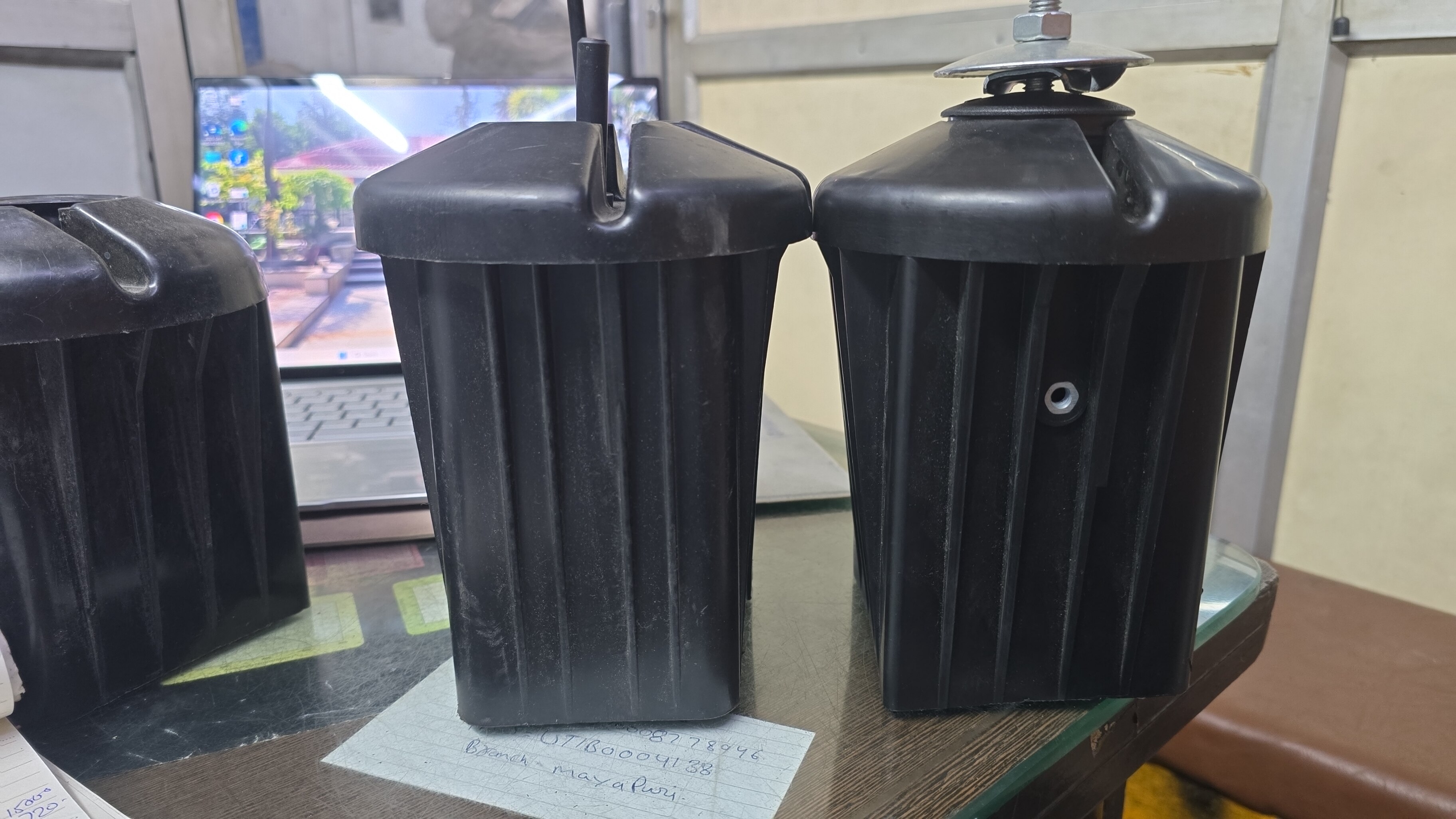 | Mold tree caps for apple and other plants View product → |
Approve the first cap by fit, force and weather performance—not appearance alone
Approve or reject the trial by measured fit, force and outdoor performance, not by appearance alone. A clean-looking cap can still fail through shrinkage, ovality, flash or weak snap retention.
1. Record the apple tree cap mould inspection against the drawing. Measure critical inside and outside diameters, wall thickness, height, taper, opening, overlap and vent dimensions with documented gauges or calibrated tools. Mark critical part tolerances individually; do not apply one blanket moulding tolerance to every feature.
Use the ISO 20457 plastic mould tolerance framework to define acceptance conditions.
2. Fit the cap on the tree or mating part and record insertion and removal force. Check snap engagement, thread fit, sealing where relevant, and retention after repeated handling and vibration. Reject parts with flash at shut-offs, sink near thick ribs, weld-line weakness, short shots, burn marks, warpage or ejector damage.
3. Expose samples for the specified Delhi outdoor period to sunlight, rain, temperature cycling and agricultural chemicals used on the tree. Recheck UV colour change, cracks, hinge fatigue, snap-force loss and dimensional change after exposure.
4. Freeze approval only after the production resin and grade are confirmed. If the resin, colour, wall thickness or tree diameter changes, repeat fit and exposure tests. A plastic mold maker for apple tree caps mayapuri in delhi should receive the same recorded acceptance results before releasing production.
Frequently asked questions
What should an apple tree cap plastic mould specification define first?
Define the cap’s job first: protecting a graft union, covering a cut branch, supporting a stem, excluding pests, limiting moisture loss, or connecting to tubing. That decision sets the opening, fit, ventilation and sealing features.
Which material and design features matter for outdoor apple tree caps?
Choose the resin with ultraviolet exposure, temperature, impact and flexibility in mind. Specify light protection, wall thickness, ventilation holes, sealing geometry and retention features together so the cap performs as one system.
How does custom injection moulding compare with trial routes?
Custom injection moulding suits repeat production and consistent dimensions, while 3D printing, machining or soft tooling can reduce initial trial time. Compare tooling cost, sample speed, surface finish, material behaviour and expected volume.
What should a Mayapuri mould-maker RFQ include?
Include a drawing or 3D file, cap dimensions, resin requirement, colour, UV exposure, tolerances, annual quantity, inspection points, sample quantity, tooling ownership and separate prices for prototype and production moulds.
How should you approve the first production cap?
Check fit on the actual branch or tube, installation and removal force, retention after handling, ventilation, sealing and resistance to sunlight and weather. Appearance alone cannot confirm field performance.
Keywords